Clinicopathological Characteristics and Recurrence Risk in Basal Cell Carcinoma Patients: A Cross-Sectional Study at Kariadi General Hospital Semarang, 2012–2023
DOI:
https://doi.org/10.54133/ajms.v10i2.2940Keywords:
Basal cell carcinoma, Clinical Pathology, Recurrence, Risk factorAbstract
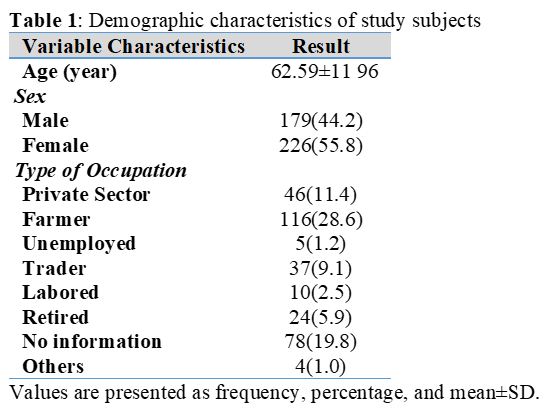
Background: Basal cell carcinoma (BCC) is responsible for 70–80% of all skin malignancies. Histopathologically, it is classified into two types: high-risk and low-risk. Evidence linking clinicopathological features of BCC to recurrence risk remains limited in Indonesia, particularly in tertiary referral centers such as Kariadi Hospital. Objective: This study aims to assess the clinicopathological features of BCC in relation to other factors influencing recurrence risk in Indonesia. Methods: A retrospective cross-sectional analytic study was conducted using medical records and anatomical pathology examination results of BCC patients diagnosed between January 2012 and December 2023. Results: Among the 405 patients included, 47.4% were classified as having high recurrence risk. Variables analyzed included age, sex, occupation, ulcer size, and tumor location. The risk of recurrence was evaluated according to lesion size, anatomical location, histological subtype, and surgical margins. Ulcer presence showed a significant association with high recurrence risk, with a prevalence ratio (PR)=1.631; 95% CI: 1.337-1.989; p<0.001. Other variables, including age, sex, occupation, ulcer size, and tumor location, did not show statistically significant associations with recurrence risk. Conclusions: The fact that an ulcer was present could be considered one of the factors in determining the risk of BCC recurrence.
Downloads
References
Dessinioti C, Stratigos A. Immunotherapy and its timing in advanced basal cell carcinoma treatment. Dermatol Pract Concept. 2023;e2023252. doi: 10.5826/dpc.1304a252. DOI: https://doi.org/10.5826/dpc.1304a252
Rezende HD, Almeida APM de, Shimoda E, Milagre ACX, Almeida LM de. Study of skin neoplasms in a university hospital: integration of anatomopathological records and its interface with the literature. Ann Bras Dermatol. 2019;94(1):42–46. doi: 10.1590/abd1806-4841.20197357. DOI: https://doi.org/10.1590/abd1806-4841.20197357
Puig S, Berrocal A. Management of high-risk and advanced basal cell carcinoma. Clin Transl Oncol. 2015;17(7):497–503. doi: 10.1007/s12094-014-1272-9. DOI: https://doi.org/10.1007/s12094-014-1272-9
Davis DS, Robinson C, Callender VD. Skin cancer in women of color: Epidemiology, pathogenesis and clinical manifestations. Int J Womens Dermatol. 2021;7(2):127–134. DOI: https://doi.org/10.1016/j.ijwd.2021.01.017
Wibawa LP, Andardewi MF, Ade Krisanti I, Arisanty R. The epidemiology of skin cancer at Dr. Cipto Mangunkusumo National Central General Hospital from 2014 to 2017. J Gen Procedural Dermatol Venereol Indonesia. 2019;4(1):11–16. doi: 10.19100/jdvi.v4i1.162. DOI: https://doi.org/10.19100/jdvi.v4i1.162
Pellegrini C, Maturo M, Di Nardo L, Ciciarelli V, Gutiérrez García-Rodrigo C, Fargnoli M. Understanding the molecular genetics of basal cell carcinoma. Int J Mol Sci. 2017;18(11):2485. doi: 10.3390/ijms18112485. DOI: https://doi.org/10.3390/ijms18112485
Castrisos G, Lewandowski R. Narrative review of the epidemiology/biology of basal cell carcinoma: a need for public health consensus. ANZ J Surg. 2021;91(6):1098–1103. doi: 10.1111/ans.16522. DOI: https://doi.org/10.1111/ans.16522
Bauer A, Haufe E, Heinrich L, Seidler A, Schulze HJ, Elsner P, et al. Basal cell carcinoma risk and solar UV exposure in occupationally relevant anatomic sites: do histological subtype, tumor localization and Fitzpatrick phototype play a role? A population-based case-control study. J Occup Med Toxicol. 2020;15(1):28. DOI: https://doi.org/10.1186/s12995-020-00279-8
Sharma R, Sharma S, Sharma R, Hussan R. Management of basal cell carcinoma of face. J Evol Med Dent Sci. 2018;7(23):2749–2752. doi: 10.14260/jemds/2018/621. DOI: https://doi.org/10.14260/jemds/2018/621
Yingjian H, Qiqi D, Ning W, Yan Z. The expression and significance of XB130 in skin basal cell carcinoma. J Clin Res Dermatol. 2019;6(2):1–5. doi: 10.15226/2378-1726/6/2/00187. DOI: https://doi.org/10.15226/2378-1726/6/2/00187
Chabbar I, Elhassan A, Berraho A. Eyelid basal cell carcinoma: A retrospective study. Scholars J Appl Med Sci. 2020;8(6):1625–1628. doi: 10.36347/sjams.2020.v08i06.042. DOI: https://doi.org/10.36347/sjams.2020.v08i06.042
Cabete J, Rafael M, Cravo M, Moura C, Sachse F, Pecegueiro M. Long-term recurrence of nonmelanoma skin cancer after topical methylaminolevulinate photodynamic therapy in a dermato-oncology department. Ann Bras Dermatol. 2015;90(6):846–850. doi: 10.1590/abd1806-4841.20154080. DOI: https://doi.org/10.1590/abd1806-4841.20154080
Santiago F, Serra D, Vieira R, Figueiredo A. Incidence and factors associated with recurrence after incomplete excision of basal cell carcinomas: a study of 90 cases. J Eur Acad Dermatol Venereol. 2010;24(12):1421–1424. doi: 10.1111/j.1468-3083.2010.03662.x. DOI: https://doi.org/10.1111/j.1468-3083.2010.03662.x
Goldman‐Lévy G, Barnhill R, Bastian BC, Kempf W, Elder D, Gerami P, et al. WHO classification of skin tumours: key updates in the fifth edition. Histopathology. 2026;88(3):555-568. doi: 10.1111/his.15562. DOI: https://doi.org/10.1111/his.15562
Schmults CD, Blitzblau R, Aasi SZ, Alam M, Amini A, Bibee K, et al. Basal cell skin cancer, version 2. 2024, NCCN Clinical Practice Guidelines in Oncology. J Natl Comprehens Cancer Network. 2023;21(11):1181-203. doi: 10.6004/jnccn.2023.0056. DOI: https://doi.org/10.6004/jnccn.2023.0056
Backman E, Oxelblom M, Gillstedt M, Dahlén Gyllencreutz J, Paoli J. Basal cell carcinoma: Epidemiological impact of clinical versus histopathological diagnosis. J Eur Acad Dermatol Venereol. 2023;37(3):521–527. doi: 10.1111/jdv.18774. DOI: https://doi.org/10.1111/jdv.18774
Deepadarshan K, Mallikarjun M, Abdu NN. Pigmented basal cell carcinoma: a clinical variant, report of two cases. J Clin Diagn Res. 2013;7(12):3010-3011. doi: 10.7860/JCDR/2013/7568.3831. DOI: https://doi.org/10.7860/JCDR/2013/7568.3831
Teng Y, Yu Y, Li S, Huang Y, Xu D, Tao X, et al. Ultraviolet radiation and basal cell carcinoma: An environmental perspective. Front Public Health. 2021;9. doi: 10.3389/fpubh.2021.666528. DOI: https://doi.org/10.3389/fpubh.2021.666528
Kilgour JM, Jia JL, Sarin KY. Review of the molecular genetics of basal cell carcinoma; Inherited susceptibility, somatic mutations, and targeted therapeutics. Cancers (Basel). 2021;13(15):3870. doi: 10.3390/cancers13153870. DOI: https://doi.org/10.3390/cancers13153870
Mustofa A, Nur Sholikah TR, Niari TS, Rahmawati YW. Basal cell carcinoma. Magna Medica. 2022;9(1):62. doi: 10.26714/magnamed.9.1.2022.62-68. DOI: https://doi.org/10.26714/magnamed.9.1.2022.62-68
Hou X, Rokohl AC, Berndt K, Li S, Ju X, Matos PAW, et al. Risk factors analysis and nomogram for predicting recurrence in periocular basal cell carcinoma. Canadian J Ophthalmol. 2025;60(4):230-237. doi: 10.1016/j.jcjo.2024.12.003. DOI: https://doi.org/10.1016/j.jcjo.2024.12.003
Mannor GE, Chern PL, Barnette D. Eyelid and periorbital skin basal cell carcinoma. Int Ophthalmol Clin. 2009;49(4):1–16. doi: 10.1097/IIO.0b013e3181b7ebe8. DOI: https://doi.org/10.1097/IIO.0b013e3181b7ebe8
Navarro‐Bielsa A, Gracia‐Cazaña T, Almagro M, De‐la‐Fuente‐Meira S, Florez Á, Yélamos O, et al. Exposome and basal cell carcinoma: a multicenter case–control study. Int J Dermatol. 2024;63(7):907–915. doi: 10.1111/ijd.17026. DOI: https://doi.org/10.1111/ijd.17026
Bellenghi M, Puglisi R, Pontecorvi G, De Feo A, Carè A, Mattia G. Sex and gender disparities in melanoma. Cancers (Basel). 2020;12(7):1819. doi: 10.3390/cancers12071819. DOI: https://doi.org/10.3390/cancers12071819
Baba PUF, Hassan AU, Khurshid J, Wani AH. Basal cell carcinoma: Diagnosis, management and prevention. J Mol Pathol. 2024;5(2):153–170. doi: 10.3390/jmp5020010. DOI: https://doi.org/10.3390/jmp5020010
Andersen LK, Davis MDP. Sex differences in the incidence of skin and skin‐related diseases in Olmsted County, Minnesota, United States, and a comparison with other rates published worldwide. Int J Dermatol. 2016;55(9):939–955. doi: 10.1111/ijd.13285. DOI: https://doi.org/10.1111/ijd.13285
Singhal S. Histopathological spectrum of basal cell carcinoma-7 years retrospective study. SSR Inst Int J Life Sci. 2020;6(2):2487-2493.. doi: 10.21276/SSR-IIJLS.2020.6.2.2. DOI: https://doi.org/10.21276/SSR-IIJLS.2020.6.2.2
Firnhaber JM. Basal cell and cutaneous squamous cell carcinomas: Diagnosis and treatment. Am Fam Physician. 2020;102(6):339–346. PMID: 32931212.
Peris K, Fargnoli MC, Kaufmann R, Arenberger P, Bastholt L, Seguin NB, et al. European consensus-based interdisciplinary guideline for diagnosis and treatment of basal cell carcinoma—update 2023. Eur J Cancer. 2023;192:113254. doi: 10.1016/j.ejca.2023.113254. DOI: https://doi.org/10.1016/j.ejca.2023.113254
Nasr I, McGrath EJ, Harwood CA, Botting J, Buckley P, Budny PG, et al. British Association of Dermatologists guidelines for the management of adults with basal cell carcinoma 2021*. Br J Dermatol. 2021;185(5):899–920. doi: 10.1111/bjd.20524. DOI: https://doi.org/10.1111/bjd.20524
Kahn S, Warso MA, Aronson IK. A Hyperpigmented perianal nodule. Dermatol Online J. 2013;19(5). doi: 10.5070/D3195018178. DOI: https://doi.org/10.5070/D3195018178
Oh S, Stark A, Reichrath J. The p53 signalling pathway in cutaneous basal cell carcinoma: An immunohistochemical description. Acta Dermato Venereologica. 2020;100(6):adv00098-2. doi: 10.2340/00015555-3420. DOI: https://doi.org/10.2340/00015555-3420
Holm A, Nissen C, Wulf H. Basal cell carcinoma is as common as the sum of all other Cancers: Implications for treatment capacity. Acta Dermatol Venereologica. 2016;96(4):505-509. doi: 10.2340/00015555-2282. DOI: https://doi.org/10.2340/00015555-2282
Trakatelli M, Morton C, Nagore E, Ulrich C, Del Marmol V, Peris K, et al. Update of the European guidelines for basal cell carcinoma management. Eur J Dermatol. 2014;24(3):312–329. doi: 10.1684/ejd.2014.2271. DOI: https://doi.org/10.1684/ejd.2014.2271
Wisdorf K, Rokohl AC, Fan W, Heindl LM. Recurrence risk of basal cell carcinoma of the eyelid with regard to demographic and clinical patient data. Res Square. 2024. doi: 10.21203/rs.3.rs-4357234/v1. DOI: https://doi.org/10.21203/rs.3.rs-4357234/v1
Pogorzelska-Dyrbuś J, Salwowska N, Bergler-Czop B. Vascular pattern in dermoscopy of basal cell carcinoma in the H- and non-H-zone. Adv Dermatol Allergol. 2023;40(2):273-276. doi: 10.5114/ada.2023.127643. DOI: https://doi.org/10.5114/ada.2023.127643
Sgouros D, Rigopoulos D, Panayiotides I, Apalla Z, Arvanitis DK, Theofili M, et al. Novel insights for patients with multiple basal cell carcinomas and tumors at high-risk for recurrence: Risk factors, clinical morphology, and dermatoscopy. Cancers (Basel). 2021;13(13):3208. doi: 10.3390/cancers13133208. DOI: https://doi.org/10.3390/cancers13133208
Symanzik C, John SM. Sun protection and occupation: Current developments and perspectives for prevention of occupational skin cancer. Front Public Health. 2022;10. doi: 10.3389/fpubh.2022.1110158. DOI: https://doi.org/10.3389/fpubh.2022.1110158
Downloads
Published
How to Cite
Issue
Section
License
Copyright (c) 2026 Al-Rafidain Journal of Medical Sciences ( ISSN 2789-3219 )

This work is licensed under a Creative Commons Attribution-NonCommercial-ShareAlike 4.0 International License.
Published by Al-Rafidain University College. This is an open access journal issued under the CC BY-NC-SA 4.0 license (https://creativecommons.org/licenses/by-nc-sa/4.0/).