Psychophysiological Response in Patients Undergoing Percutaneous Coronary Intervention: A Systematic Review and Walker–Avant Concept Analysis
DOI:
https://doi.org/10.54133/ajms.v10i1.2663Keywords:
Concept analysis, PCI, Psychological well-being, Walker and AvantAbstract
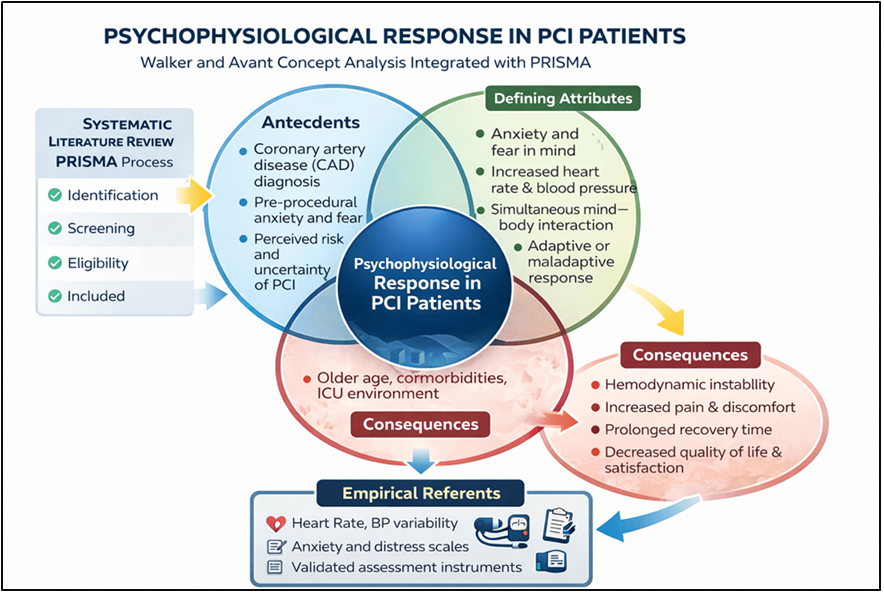
Background: Psychological well-being is crucial for breast cancer survivors facing chronic illness and psychosocial challenges, yet psychological well-being remains inconsistently defined in the literature. Objective: To clarify the definitions, attributes, antecedents, consequences, and empirical indicators of psychological well-being using the Walker-Avant concept analysis. Methods: A systematic literature review was conducted using PubMed, ScienceDirect, Google Scholar, and ProQuest. Empirical and theoretical full-text studies addressing psychological well-being were selected following PRISMA guidelines. Seven articles were analyzed using the eight steps of the Walker-Avant method. Results: Key frameworks from Ryff, Ryan and Deci, WHO, Diener et al., Keyes, Zhou et al., and Grassi et al. indicate that psychological well-being is a motivational process characterized by self-acceptance, emotional regulation, adaptive coping, positive social relationships, meaning in life, autonomy, and adaptive capacity. Antecedents include illness perception, early distress, social support, and self-efficacy, while consequences involve positive adaptation, improved quality of life, and emotional stability. Conclusions: Psychological well-being is a multidimensional, dynamic construct essential to the adaptation of breast cancer survivors aged 10–25 years and provides a theoretical basis for developing evidence-based nursing interventions to improve mental health and quality of life.
Downloads
References
Renato de Oliveira M, Gondim de Almeida N, Cavalcante Guedes MV, da Silva LF, de Freitas MC, Martins Torres RA, et al. Betty Neuman systems model: Analysis according to Meleis. SOJ Nur Health Care. 2018;4(2):1-6. doi: 10.15226/2471-6529/4/2/00145.
Tovar G, Omaira L, Leticia DS, Fabián CM. Evidence-and Betty Neuman’s model-based nursing care to prevent delirium in the intensive care unit. Enfermería Global. 2016;41:64-77.
Akhlaghi E, Babaei S, Abolhassani S. Modifying stressors using Betty Neuman system modeling in coronary artery bypass graft: A randomized clinical trial. J Caring Sci. 2020;9(1):13-19. doi: 10.34172/jcs.2020.003. DOI: https://doi.org/10.34172/jcs.2020.003
Olsen SJ, Schirmer H, Wilsgaard T, Bønaa KH, Hanssen TA. Cardiac rehabilitation and symptoms of anxiety and depression after percutaneous coronary intervention. Eur J Prev Cardiol. 2018;25(10):1017-1025. doi: 10.1177/2047487318778088. DOI: https://doi.org/10.1177/2047487318778088
Tang X, Liu G, Zeng YJ. Anxiety disorders following percutaneous coronary intervention for acute myocardial infarction: A comprehensive review of clinical manifestations and interventions. World J Psychiatry. 2025;15. doi: 10.5498/wjp.v15.i12.110290 DOI: https://doi.org/10.5498/wjp.v15.i12.110290
Hassan A, Shutnan I, Athbi HA. Distraction Using Virtual Reality Reduces Pain and Anxiety After PCI. Indonesian J Health Sci Med. 2025;2. doi: 10.21070/ijhsm.v2i2.206. DOI: https://doi.org/10.21070/ijhsm.v2i2.206
Zhang G, F. Lin F. Influence of continuous nursing intervention on medication compliance and negative emotion of patients with acute myocardial infarction after percutaneous coronary intervention. Chinese J Primary Med Pharm. 2017;24(8):1156–1160. doi: 10.3760/cma.j.issn.1008-6706.2017.08.009.
Hilty DM, Randhawa K, Maheu MM, McKean AJS, Pantera R, Mishkind MC, et al. A review of telepresence, virtual reality, and augmented reality applied to clinical care. J Technol Behav Sci. 2020;5(1):1-28 doi: 10.1007/s41347-020-00126-x. DOI: https://doi.org/10.1007/s41347-020-00126-x
Chen L. Effectiveness of the Roy adaptation model-based nursing intervention in improving physiological, psychological, and social outcomes in patients with Parkinson's disease. BMC Neurol. 2025;25(1):219. doi: 10.1186/s12883-025-04232-2. DOI: https://doi.org/10.1186/s12883-025-04232-2
Pop SI, Procopciuc A, Arsintescu B, Mițariu M, Mițariu L, Pop RV, et al. Three-dimensional assessment of upper airway volume and morphology in patients with different sagittal skeletal patterns. Diagnostics (Basel). 2024;14(9):903. doi: 10.3390/diagnostics14090903. DOI: https://doi.org/10.3390/diagnostics14090903
Salih SHA. Mode of referral and time to primary PCI in ST-elevation myocardial infarction. Al-Rafidain J Med Sci. 2025;(2),272–277. doi: 10.54133/ajms.v9i2.2553. DOI: https://doi.org/10.54133/ajms.v9i2.2553
Grimm W, Grimm K, Greene B, Parahuleva M. Predictors of pacing-dependency in patients with cardiovascular implantable electronic devices. Cardiol J. 2021;28(3):423-430. doi: 10.5603/CJ.a2019.0088. DOI: https://doi.org/10.5603/CJ.a2019.0088
Calegari IB, Borges E Silva L, Silva FF, Dos Santos Felix MM, et al. Physiological and psychological changes in patients undergoing percutaneous coronary intervention: An integrative review. Crit Care Nurse. 2025;45(2):13-24. doi: 10.4037/ccn2025959. DOI: https://doi.org/10.4037/ccn2025959
Yunita M, Laras PB, Hadi A, Aryani E, Prayogi F, Istiqomah OR. Optimism and quality of life post-PCI: Integrating psychological resilience into holistic rehabilitation. Gen Hosp Psychiatry. 2025;95:3-4. doi: 10.1016/j.genhosppsych.2025.03.007. DOI: https://doi.org/10.1016/j.genhosppsych.2025.03.007
Shen X, Zhu X, Wu Y, Zhou Y, Yang L, Wang Y, et al. Effects of a psychological intervention programme on mental stress, coping style and immune function in percutaneous coronary intervention patients. PLoS One. 2018;13(1):e0187745. doi: 10.1371/journal.pone.0187745. DOI: https://doi.org/10.1371/journal.pone.0187745
Ye R, Zhou X, Shao F, Xiong L, Hong J, Huang H, et al. Feasibility of a 5G-based robot-assisted remote ultrasound system for cardiopulmonary assessment of patients with coronavirus disease 2019. Chest. 2021;159(1):270-281. doi: 10.1016/j.chest.2020.06.068. DOI: https://doi.org/10.1016/j.chest.2020.06.068
Bhoja R, Guttman OT, Fox AA, Melikman E, Kosemund M, Gingrich KJ. Psychophysiological stress indicators of heart rate variability and electrodermal activity with application in healthcare simulation research. Simul Healthc. 2020;15(1):39-45. doi: 10.1097/SIH.0000000000000402. DOI: https://doi.org/10.1097/SIH.0000000000000402
Mozaffarian D, Benjamin EJ, Go AS, Arnett DK, Blaha MJ, Cushman M, et al. American Heart Association Statistics Committee; Stroke Statistics Subcommittee. Heart Disease and Stroke Statistics-2016 Update: A Report From the American Heart Association. Circulation. 2016;133(4):e38-360. doi: 10.1161/CIR.0000000000000350. DOI: https://doi.org/10.1161/CIR.0000000000000350
Li Y, Wang LH, Zeng H, Zhao Y, Lu YQ, Zhang TY, et al. Psychological consistency network characteristics and influencing factors in patients after percutaneous coronary intervention treatment. World J Psychiatry. 2025;15(3):102571. doi: 10.5498/wjp.v15.i3.102571. DOI: https://doi.org/10.5498/wjp.v15.i3.102571
Sanford BT, Ciarrochi J, Hofmann SG, Chin F, Gates KM, Hayes SC. Toward empirical process-based case conceptualization: An idionomic network examination of the process-based assessment tool. J Contextual Behav Sci. 2022;25(4):10–25. doi: 10.1016/j.jcbs.2022.05.006. DOI: https://doi.org/10.1016/j.jcbs.2022.05.006
Martínez N, Connelly CD, Pérez A, Calero P. Self-care: A concept analysis. Int J Nurs Sci. 2021;8(4):418-425. doi: 10.1016/j.ijnss.2021.08.007. DOI: https://doi.org/10.1016/j.ijnss.2021.08.007
Di Carlo F, Vicinelli MC, Pettorruso M, De Risio L, Migliara G, Baccolini V, et al. Connected minds in disconnected bodies: Exploring the role of interoceptive sensibility and alexithymia in problematic use of the internet. Compr Psychiatry. 2024;129:152446. doi: 10.1016/j.comppsych.2023.152446. DOI: https://doi.org/10.1016/j.comppsych.2023.152446
Pezeshki L, Sadeghian H, Mohebbi A, Keshmiri M, Haddadin S. Personalized assistance in robotic rehabilitation: Real-time adaptation via energy-based performance monitoring. IEEE Transact Automat Sci Engineer. 2025;22:13298-13309. doi: 10.1109/tase.2025.3552446. DOI: https://doi.org/10.1109/TASE.2025.3552446
Khalili H, Heydari A. Poor care: A Walker and Avant concept analysis. J Caring Sci. 2022;12(1):25-32. doi: 10.34172/jcs.2023.30507. DOI: https://doi.org/10.34172/jcs.2023.30507
Luh N, Indrayani D. Trends of concept analysis in nursing science with Walker and Avant approaches: a literature review. Innov Health Soc. 2025;5(1):51–62. doi: 10.31603/ihs.12858. DOI: https://doi.org/10.31603/ihs.12858
Campbell S, Greenwood M, Prior S, Shearer T, Walkem K, Young S, et al. Purposive sampling: complex or simple? Research case examples. J Res Nurs. 2020;25(8):652-661. doi: 10.1177/1744987120927206. DOI: https://doi.org/10.1177/1744987120927206
Tang J, Klunklin P, Lirtmunlikaporn S, Wang Y. Treatment adherence: A concept analysis using the Walker & Avant method. Patient Prefer Adherence. 2024;18:2067-2075. doi: 10.2147/PPA.S477615. DOI: https://doi.org/10.2147/PPA.S477615
Huang X, Lin J, Demner-Fushman D. Evaluation of PICO as a knowledge representation for clinical questions. AMIA Annu Symp Proc. 2006;2006:359-363.
Page MJ, McKenzie JE, Bossuyt PM, Boutron I, Hoffmann TC, Mulrow CD, et al. The PRISMA 2020 statement: an updated guideline for reporting systematic reviews. Syst Rev. 2021;10:89. doi: 10.1186/s13643-021-01626-4. DOI: https://doi.org/10.1186/s13643-021-01626-4
Alghamdi MG. Nursing workload: a concept analysis. J Nurs Manag. 2016;24(4):449-457. doi: 10.1111/jonm.12354. DOI: https://doi.org/10.1111/jonm.12354
Diaz J, Danvers Perez K. Workload in nursing: A concept analysis. Horiz Enferm. 2018;29:204–211. doi: 10.7764/Horiz_Enferm.29.3.204-211. DOI: https://doi.org/10.7764/Horiz_Enferm.29.3.204-211
Nadal C, Sas C, Doherty G. Technology acceptance in mobile health: Scoping review of definitions, models, and measurement. J Med Internet Res. 2020;22(7):e17256. doi: 10.2196/17256. DOI: https://doi.org/10.2196/17256
Pimple P, Hammadah M, Wilmot K, Ramadan R, Al Mheid I, Levantsevych O, et al. The relation of psychosocial distress with myocardial perfusion and stress-induced myocardial ischemia. Psychosom Med. 2019;81(4):363-371. doi: 10.1097/PSY.0000000000000674. DOI: https://doi.org/10.1097/PSY.0000000000000674
Sedaghat S, Rostami S, Ebadi A, Fereidooni-Moghadam M. Stressors in open-heart surgery patients: A qualitative study. ARYA Atheroscler. 2019l;15(4):192-200. doi: 10.22122/arya.v15i4.1840.
Umamaheswaran S, Dasari SK, Yang P, Lutgendorf SK, Sood AK. Stress, inflammation, and eicosanoids: an emerging perspective. Cancer Metastasis Rev. 2018;37(2-3):203-211. doi: 10.1007/s10555-018-9741-1. DOI: https://doi.org/10.1007/s10555-018-9741-1
Zhou C, Zheng W, Tan F, Lai S, Yuan Q. Influence of health promoting lifestyle on health management intentions and behaviors among Chinese residents under the integrated healthcare system. PLoS One. 2022;17(1):e0263004. doi: 10.1371/journal.pone.0263004. DOI: https://doi.org/10.1371/journal.pone.0263004
Limonti F, Gigliotti A, Gravante F, Ramacciati N. The impact of cardiac telerehabilitation on health-related quality of life in patients undergoing percutaneous coronary intervention (PCI): A systematic review protocol. Nurs Rep. 2024;14(4):3984-3992. doi: 10.3390/nursrep14040291. DOI: https://doi.org/10.3390/nursrep14040291
Ahmad M, Mehta P, Reddivari AKR, Mungee S. Percutaneous coronary intervention. 2023 Jun 5. In: StatPearls [Internet]. Treasure Island (FL): StatPearls Publishing; 2025 Jan. PMID: 32310583.
Alpert JS. New coronary heart disease risk factors. Am J Med. 2023;136(4):331-332. doi: 10.1016/j.amjmed.2022.08.002. DOI: https://doi.org/10.1016/j.amjmed.2022.08.002
Carney RM, Freedland KE. New perspectives on treatment of depression in coronary heart disease. Psychosom Med. 2023;85(6):474-478. doi: 10.1097/PSY.0000000000001219.. DOI: https://doi.org/10.1097/PSY.0000000000001219
Li L, Wang H, Wang Y, Gao X, Liu G, Zhao Z, et al. Path analysis for key factors influencing long-term quality of life of patients following a percutaneous coronary intervention. Coron Artery Dis. 2019;30(5):339-345. doi: 10.1097/MCA.0000000000000712. DOI: https://doi.org/10.1097/MCA.0000000000000712
Douma ER, Kop WJ, Kupper N. Associations between psychological factors and adherence to health behaviors after percutaneous coronary intervention: The role of cardiac rehabilitation. Ann Behav Med. 2024;58(5):328-340. doi: 10.1093/abm/kaae008. DOI: https://doi.org/10.1093/abm/kaae008
Su CS, Shen CH, Chang KH, Lai CH, Liu TJ, Chen KJ, et al. Clinical outcomes of patients with multivessel coronary artery disease treated with robot-assisted coronary artery bypass graft surgery versus one-stage percutaneous coronary intervention using drug-eluting stents. Medicine (Baltimore). 2019;98(38):e17202. doi: 10.1097/MD.0000000000017202. DOI: https://doi.org/10.1097/MD.0000000000017202
Qiang H, Li L, Hua Y, Han L. Research progress on the depression status and nursing intervention in patients after percutaneous coronary intervention. J Clin Nurs Res. 2024;8(2):33–43. doi: 10.26689/jcnr.v8i2.5766. DOI: https://doi.org/10.26689/jcnr.v8i2.5766
Wu S, Cao W, Fu S, Yao B, Yang Z, Yin C, et al. CardioAI: A multimodal AI-based system to support symptom monitoring and risk prediction of cancer treatment-induced cardiotoxicity. Proc SIGCHI Conf Hum Factor Comput Syst. 2025;2025:313. doi: 10.1145/3706598.3714272. DOI: https://doi.org/10.1145/3706598.3714272
Racodon M, Vanhove P, Fabre C, Malanda F, Secq A. Comparison between hybrid cardiac rehabilitation and center-based cardiac rehabilitation: a noninferiority randomized controlled trial. Int J Rehabil Res. 2025;48(1):25-30. doi: 10.1097/MRR.0000000000000658. DOI: https://doi.org/10.1097/MRR.0000000000000658
Celano CM, Daunis DJ, Lokko HN, Campbell KA, Huffman JC. Anxiety disorders and cardiovascular disease. Curr Psychiatry Rep. 2016;18(11):101. doi: 10.1007/s11920-016-0739-5. DOI: https://doi.org/10.1007/s11920-016-0739-5
Folkman S. The case for Acute Cardiac Events’in the stress process. Anxiety Stress Coping. 2008;21(1):3-14. doi: 10.1080/10615800701740457. DOI: https://doi.org/10.1080/10615800701740457
Edge D, Watkins ER, Limond J, Mugadza J. The efficacy of self-guided internet and mobile-based interventions for preventing anxiety and depression - A systematic review and meta-analysis. Behav Res Ther. 2023;164:104292. doi: 10.1016/j.brat.2023.104292. DOI: https://doi.org/10.1016/j.brat.2023.104292
Yang YC, Boen C, Gerken K, Li T, Schorpp K, Harris KM. Social relationships and physiological determinants of longevity across the human life span. Proc Natl Acad Sci U S A. 2016;113(3):578-583. doi: 10.1073/pnas.1511085112. DOI: https://doi.org/10.1073/pnas.1511085112
Ettenberger M, Casanova-Libreros R, Chávez-Chávez J, Cordoba-Silva JG, Betancourt-Zapata W, Maya R, et al. Effect of music therapy on short-term psychological and physiological outcomes in mechanically ventilated patients: A randomized clinical pilot study. J Intensive Med. 2024;4(4):515-525. doi: 10.1016/j.jointm.2024.01.006. DOI: https://doi.org/10.1016/j.jointm.2024.01.006
Mrug S, Pollock JS, Pollock DM, Seifert ME, Johnson KA, Knight DC. Early life stress, coping, and cardiovascular reactivity to acute social stress. Psychosom Med. 2023;85(2):118-129. doi: 10.1097/PSY.0000000000001165. DOI: https://doi.org/10.1097/PSY.0000000000001165
Maqsood A, Gul S, Noureen N, Yaswi A. Dynamics of perceived stress, stress appraisal, and coping strategies in an evolving educational landscape. Behav Sci (Basel). 2024;14(7):532. doi: 10.3390/bs14070532. DOI: https://doi.org/10.3390/bs14070532
Carver CS, Scheier MF, Weintraub JK. Assessing coping strategies: a theoretically based approach. J Pers Soc Psychol. 1989;56(2):267-283. doi: 10.1037//0022-3514.56.2.267. DOI: https://doi.org/10.1037/0022-3514.56.2.267
Poulus D, Coulter TJ, Trotter MG, Polman R. Stress and coping in esports and the influence of mental toughness. Front Psychol. 2020;11:628. doi: 10.3389/fpsyg.2020.00628. DOI: https://doi.org/10.3389/fpsyg.2020.00628
Radin A, Ganz PA, Van Dyk K, Stanton AL, Bower JE. Executive functioning and depressive symptoms after cancer: The mediating role of coping. Psychosom Med. 2021;83(3):291-299. doi: 10.1097/PSY.0000000000000926. DOI: https://doi.org/10.1097/PSY.0000000000000926
Munk PS, Isaksen K, Brønnick K, Kurz MW, Butt N, Larsen AI. Symptoms of anxiety and depression after percutaneous coronary intervention are associated with decreased heart rate variability, impaired endothelial function and increased inflammation. Int J Cardiol. 2012;158(1):173-176. doi: 10.1016/j.ijcard.2012.04.085. DOI: https://doi.org/10.1016/j.ijcard.2012.04.085
Ashour A, Al-Rawashdeh S, Tanash M, Al-Smadi A, Alshraifeen A, Shajrawi A. Changes in the Anxiety levels of patients undergoing percutaneous coronary intervention. Dimens Crit Care Nurs. 2023;42(1):15-21. doi: 10.1097/DCC.0000000000000560. DOI: https://doi.org/10.1097/DCC.0000000000000560
Folkman S, (Ed.), Stress: Appraisal and coping, In: Encyclopedia of Behavioral Medicine. Sage Publisher; 2020; 2177–2179. doi: 10.4135/9781412952576.n198. DOI: https://doi.org/10.1007/978-3-030-39903-0_215
Huffman JC, Albanese AM, Campbell KA, Celano CM, Millstein RA, Mastromauro CA, et al. The positive emotions after acute coronary events behavioral health intervention: Design, rationale, and preliminary feasibility of a factorial design study. Clin Trials. 2017;14(2):128-139. doi: 10.1177/1740774516673365. DOI: https://doi.org/10.1177/1740774516673365
Dimsdale JE. Psychological stress and cardiovascular disease. J Am Coll Cardiol. 2008;51(13):1237-1246. doi: 10.1016/j.jacc.2007.12.024. DOI: https://doi.org/10.1016/j.jacc.2007.12.024
Mujtaba SF, Sial JA, Karim M. Depression and anxiety in patients undergoing percutaneous coronary intervention for acute coronary syndrome. Pak J Med Sci. 2020;36(5):1100-1105. doi: 10.12669/pjms.36.5.1749. DOI: https://doi.org/10.12669/pjms.36.5.1749
Yu X, Cao J, Xu J, Xu Q, Chen H, Yu D, et al L. Efficacy of telemedical interventional management in patients with coronary heart disease undergoing percutaneous coronary intervention: Randomized controlled trial. J Med Internet Res. 2025;27:e63350. doi: 10.2196/63350. DOI: https://doi.org/10.2196/63350
Zhou Y, Wen X, Han S, Li Y, Lv Y, Li Q. Effect of confucian-based acceptance and commitment therapy(C-ACT) on mental health and psychological flexibility improvement of college students: A randomized controlled trial. Acta Psychol (Amst). 2025;254:104808. doi: 10.1016/j.actpsy.2025.104808. DOI: https://doi.org/10.1016/j.actpsy.2025.104808
Segal ZV, Dimidjian S, Beck A, Boggs JM, Vanderkruik R, Metcalf CA, et al. Outcomes of online mindfulness-based cognitive therapy for patients with residual depressive symptoms: A randomized clinical trial. JAMA Psychiatry. 2020;77(6):563-573. doi: 10.1001/jamapsychiatry.2019.4693. DOI: https://doi.org/10.1001/jamapsychiatry.2019.4693
Mozaffari F, Tavangar H, Pourmovahed Z. Comparing the effects of muscle relaxation and music therapy on anxiety among candidates for coronary angiography: A randomized clinical trial. Nurs Midwifery Stud. 2020;9(3):124–129. doi: 10.4103/nms.nms_90_18. DOI: https://doi.org/10.4103/nms.nms_90_18
Forooghy M, Mottahedian Tabrizi E, Hajizadeh E, Pishgoo B. Effect of music therapy on patients' anxiety and hemodynamic parameters during coronary angioplasty: A randomized controlled trial. Nurs Midwifery Stud. 2015;4(2):e25800. doi: 10.17795/nmsjournal25800. DOI: https://doi.org/10.17795/nmsjournal25800
Moghadam MS, Parvizifard A, Foroughi A, Ahmadi SM, Farshchian N. An examination of the effectiveness of mindfulness-integrated cognitive behavior therapy on depression, anxiety, stress and sleep quality in Iranian women with breast cancer: a randomized controlled trial. Sci Rep. 2025;15(1):11041. doi: 10.1038/s41598-025-85745-1.. DOI: https://doi.org/10.1038/s41598-025-85745-1
Xu J, Ye C, Peng F, Lv H, Tang W, Xu, C. Impact of combined exercise rehabilitation and continuous health education on the quality of life and mental health of patients post-coronary stent implantation. The Heart Surgery Forum. 2024;27(8):E883-E890. doi: 10.59958/hsf.7717. DOI: https://doi.org/10.59958/hsf.7717
Li N, Chen X. Impact of evidence-based nursing interventions on psychological status and myocardial injury in patients with myocardial infarction following percutaneous coronary intervention for reperfusion injury. Front Physiol. 2025;16:1597416. doi: 10.3389/fphys.2025.1597416. DOI: https://doi.org/10.3389/fphys.2025.1597416
Yuan L, Yuan L. Effectiveness of nursing intervention on anxiety, psychology and self-efficacy among elderly patients with acute coronary syndrome after percutaneous coronary intervention. Medicine (United States). 2021;100. doi: 10.1097/MD.0000000000026899. DOI: https://doi.org/10.1097/MD.0000000000026899
Frederix I, Caiani EG, Dendale P, Anker S, Bax J, Böhm A, et al. Overcoming challenges in digital health implementation in cardiovascular medicine. Eur J Prev Cardiol. 2019;26(11):1166-1177. doi: 10.1177/2047487319832394. DOI: https://doi.org/10.1177/2047487319832394
Dahlem NW, Zimet GD, Walker RR. The Multidimensional scale of perceived social support: A confirmation study. J Clin Psychol. 1991;47(6):756-761. doi: 10.1002/1097-4679(199111)47:6<756::aid-jclp2270470605>3.0.co;2-l. DOI: https://doi.org/10.1002/1097-4679(199111)47:6<756::AID-JCLP2270470605>3.0.CO;2-L
Yamaguchi D, Asano Y, Kuwahara K, Izawa A. Coping strategies and changes in type D personality were associated with depressive tendency at 9 months after percutaneous coronary intervention. PLoS One. 2025;20(1):e0316639. doi: 10.1371/journal.pone.0316639. DOI: https://doi.org/10.1371/journal.pone.0316639
Limonti F, Gigliotti A, Cecere L, Varvaro A, Bosco V, Mazzotta R, et al. Evaluating the efficacy and impact of home-based cardiac telerehabilitation on health-related quality of life (HRQOL) in patients undergoing percutaneous coronary intervention (PCI): A systematic review. J Clin Med. 2025;14(14):4971. doi: 10.3390/jcm14144971. DOI: https://doi.org/10.3390/jcm14144971
Saini RK, Chaudhury S, Singh N, Chadha DS, Kapoor R. Depression, anxiety, and quality of life after percuataneous coronary interventions. Ind Psychiatry J. 2022;31(1):6-18. doi: 10.4103/ipj.ipj_126_21. DOI: https://doi.org/10.4103/ipj.ipj_126_21
Shaikh Z, Khan AN, Maken GR, Shabbir S, Malik ES, Kumar M, et al. Frequency of depression and anxiety in patients with acute coronary syndrome. Pak Heart J. 2023;56(1):77-81. doi: 10.47144/phj.v56i1.2401. DOI: https://doi.org/10.47144/phj.v56i1.2401
Tully PJ, Baker RA. Depression, anxiety, and cardiac morbidity outcomes after coronary artery bypass surgery: a contemporary and practical review. J Geriatr Cardiol. 2012;9(2):197-208. doi: 10.3724/SP.J.1263.2011.12221. DOI: https://doi.org/10.3724/SP.J.1263.2011.12221
Kang YS, Choi SY, Ryu E. The effectiveness of a stress coping program based on mindfulness meditation on the stress, anxiety, and depression experienced by nursing students in Korea. Nurse Educ Today. 2009;29(5):538-543. doi: 10.1016/j.nedt.2008.12.003. DOI: https://doi.org/10.1016/j.nedt.2008.12.003
Zhou T, Dong P, Hu Y, Wang J, Hu M, Chen X, et al. Reminiscence therapy-involved care program alleviates cognitive impairment and depression in elderly patients with acute coronary syndrome treated with percutaneous coronary intervention. Int Heart J. 2025;66(2):293-301. doi: 10.1536/ihj.24-637. DOI: https://doi.org/10.1536/ihj.24-637
Bordbar M, Fereidouni Z, Morandini MK, Najafi Kalyani M. Efficacy of complementary interventions for management of anxiety in patients undergoing coronary angiography: A rapid systematic review. J Vasc Nurs. 2020;38(1):9-17. doi: 10.1016/j.jvn.2019.12.005. DOI: https://doi.org/10.1016/j.jvn.2019.12.005
Liu F, Liu F, Li J, Du Y, Han X. Effectiveness and safety of treating negative emotions after PCI from the perspective of Qi and blood: A systematic review and meta-analysis. Evid Based Complement Alternat Med. 2022;2022:8604472. doi: 10.1155/2022/8604472. DOI: https://doi.org/10.1155/2022/8604472
Khan AA, Hussain A, Maqbool R. Prevalence of psychological distress among the patients with cardiac issues: Gender and marital-status are in focus. Human Nat J Soc Sci. 2023;4(1):343-353. doi: 10.71016/hnjss/tdm00n67. DOI: https://doi.org/10.71016/hnjss/tdm00n67
Rouhi Balasi L, Salari A, Nourisaeed A, Moaddab F, Shakiba M, Givzadeh H. Anxiety and depression in patients undergoing coronary angioplasty. JCCNC. 2016;2(4):231-238. doi: 10.32598/jccnc.2.4.231. DOI: https://doi.org/10.32598/jccnc.2.4.231
Trotter R, Gallagher R, Donoghue J. Anxiety in patients undergoing percutaneous coronary interventions. Heart Lung. 2011;40(3):185-192. doi: 10.1016/j.hrtlng.2010.05.054. DOI: https://doi.org/10.1016/j.hrtlng.2010.05.054
Malik M, Rehman H, Hussain A, Hashmi A, Al-Sunaidar KA, Balogh G, et al. Psychological burden and coping strategies among Pakistani adults: A cross-sectional survey study. Epidemiologia (Basel). 2025;6(3):30. doi: 10.3390/epidemiologia6030030. DOI: https://doi.org/10.3390/epidemiologia6030030
Tofler GH, Stone PH, Maclure M, Edelman E, Davis VG, Robertson T, et al. Analysis of possible triggers of acute myocardial infarction (the MILIS study). Am J Cardiol. 1990;66(1):22-27. doi: 10.1016/0002-9149(90)90729-k. DOI: https://doi.org/10.1016/0002-9149(90)90729-K
Leaviss J, Davis S, Ren S, Hamilton J, Scope A, Booth A, et al. Behavioural modification interventions for medically unexplained symptoms in primary care: systematic reviews and economic evaluation. Health Technol Assess. 2020;24(46):1-490. doi: 10.3310/hta24460. DOI: https://doi.org/10.3310/hta24460
. Freitas TH, Andreoulakis E, Alves GS, Miranda HL, Braga LL, Hyphantis T, et al. Associations of sense of coherence with psychological distress and quality of life in inflammatory bowel disease. World J Gastroenterol. 2015;21(21):6713-6727. doi: 10.3748/wjg.v21.i21.6713. DOI: https://doi.org/10.3748/wjg.v21.i21.6713
Pearlin LI, Lieberman MA, Menaghan EG, Mullan JT. The stress process. J Health Soc Behav. 1981;22(4):337-356. DOI: https://doi.org/10.2307/2136676
Siska S, Marisa DE, Purbaningsih ES, Karlina N. Application of deep breathing relaxation technique in hypertensive patients to reduce blood pressure. Indogenius. 2025;4(2A):59–67. doi: 10.56359/IGJ.V4I2A.717. DOI: https://doi.org/10.56359/igj.v4i2A.717
Sukarnaeni S, Muadi, Marisa DE. Efektivitas terapi relaksasi deep breathing dalam mengurangi ansietas pasien hemodialisis dengan gagal ginjal kronis. Sci J Nurs. 2025;11(3):403–407. doi: : 10.33023/JIKEP.V11I3.2619. DOI: https://doi.org/10.33023/jikep.v11i3.2619
Sareban M, Treff G, Wuppinger T, Zimpfer D, Niebauer J. The valuable role of cardio-pulmonary exercise testing in the diagnosis of atrial septal defect in a competitive triathlete: a case report. Eur Heart J Case Rep. 2024;8(6):ytae278. doi: 10.1093/ehjcr/ytae278. DOI: https://doi.org/10.1093/ehjcr/ytae278
Oudkerk Pool MD, Hooglugt JQ, Schijven MP, Mulder BJM, Bouma BJ, de Winter RJ, et al. Review of digitalized patient education in cardiology: A future ahead? Cardiology. 2021;146(2):263-271. doi: 10.1159/000512778. DOI: https://doi.org/10.1159/000512778
Ryff CD, Singer B. Psychological well-being: Meaning, measurement, and implications for psychotherapy research. Psychother Psychosom. 1996;65(1):14-23. doi: 10.1159/000289026. DOI: https://doi.org/10.1159/000289026
Ryff CD, Keyes LM. The structure of psychological well-being revisited. J Pers Soc Psychol. 1995;69(4):719–727. doi: 10.1037//0022-3514.69.4.719. DOI: https://doi.org/10.1037/0022-3514.69.4.719
Ryff CD. Psychological well-being revisited: Advances in science and practice. Psychother Psychosom. 2023;83(1):10. doi: 10.1159/000353263. DOI: https://doi.org/10.1159/000353263
Graneheim UH, Lundman B. Qualitative content analysis in nursing research: Concepts, procedures and measures to achieve trustworthiness. Nurse Educ Today. 2003;24(2):105–112. doi: 10.1016/j.nedt.2003.10.001. DOI: https://doi.org/10.1016/j.nedt.2003.10.001
Gunawan J, Aungsuroch Y, Marzilli C. Beyond the classics: A comprehensive look at concept analysis methods in nursing education and research. Belitung Nurs J. 2023;9(5):406–410, doi: 10.33546/bnj.2544. DOI: https://doi.org/10.33546/bnj.2544
Luštrek M, Bohanec M, Cavero Barca C, Ciancarelli MC, Clays E, Dawodu AA, et al. A personal health system for self-management of congestive heart failure (HeartMan): Development, technical evaluation, and proof-of-concept randomized controlled trial. JMIR Med Inform. 2021;9(3):e24501. doi: 10.2196/24501. DOI: https://doi.org/10.2196/24501
Downloads
Published
How to Cite
Issue
Section
License
Copyright (c) 2026 Al-Rafidain Journal of Medical Sciences ( ISSN 2789-3219 )

This work is licensed under a Creative Commons Attribution-NonCommercial-ShareAlike 4.0 International License.
Published by Al-Rafidain University College. This is an open access journal issued under the CC BY-NC-SA 4.0 license (https://creativecommons.org/licenses/by-nc-sa/4.0/).