Smartwatch-Based Multidimensional Training Program to Improve Holistic Health Outcomes in Sedentary Adults
DOI:
https://doi.org/10.54133/ajms.v10i1.2746Keywords:
Holistic fitness, Multidimensional training, Sedentary adults, Smartwatch-based program, Wearable technologyAbstract
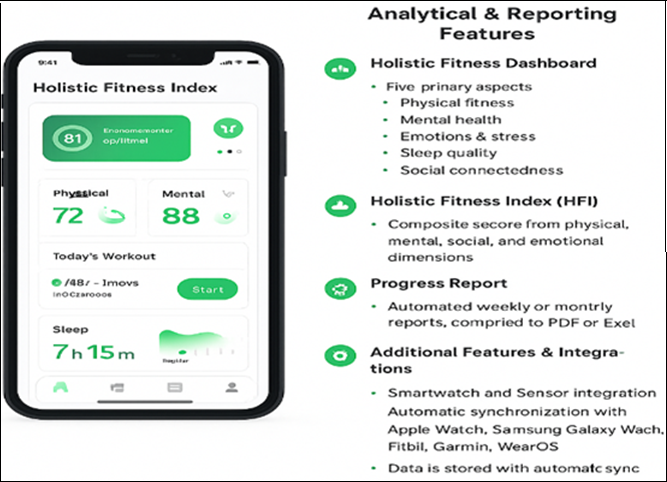
Background: Sedentary lifestyles are a growing public health concern associated with increased cardiometabolic risk, reduced physical fitness, and impaired psychological well-being. Although smartwatches enable continuous health monitoring, their potential to support structured, multidimensional exercise interventions for holistic health improvement remains underutilized among sedentary adults. Objective: To develop and evaluate the effectiveness of a Smartwatch-Based Multi-Dimensional Training Program (SBMTP) designed to improve holistic fitness, encompassing physical, psychological, and emotional health, in sedentary adults. Methods: Research and development using the ADDIE model was employed to develop the SBMTP application, which integrated real-time smartwatch data to deliver personalized, multidimensional exercise guidance. The six-week intervention in sedentary adults was evaluated using physiological and subjective fitness measures and user surveys, with pre-post changes analysis. Results: The six-week intervention led to substantial enhancements in all fitness metrics, including decreases in resting heart rate and body mass index, as well as increases in running distance, exercise duration, calories expended, and subjective fitness assessments (p<0.05). User evaluation demonstrated high feasibility and acceptability, with application suitability rated at 96.6%, program suitability between 89.3% and 90.3%, user satisfaction at 87.5%, and overall positive feedback reaching 91.0%, indicating strong user acceptance and functional effectiveness. Conclusions: The smartwatch-based multidimensional training program represents a feasible and well-accepted digital health intervention that effectively enhances holistic fitness through personalized, data-driven exercise guidance. These findings demonstrate the potential of wearable technology to support preventive health strategies and promote sustainable lifestyle changes among sedentary adults.
Downloads
References
Ilham I, Putra RA, Orhan BE, Prasetyo T, Effendi R, Kurniawan R, et al. The effects of ladder drill and plyometric training on agility in futsal players considering body mass index. Phys Educ Theory Methodol. 2025;25(4):886–895. doi: 10.17309/tmfv.2025.4.17.
Sari AP, Kurniawan R, Indika PM, Wulan TS, Syafrianto D, Sari DN. Exploring the impact of aerobic gymnastics on reducing blood: with hypertension medications vs without hypertension medications. J Phys Educ Sport. 2023;23(12):3253–3263. doi: 10.7752/jpes.2023.12372.
Hohmann A, Schmid J, Charbonnet B. Toward a differentiated model of athlete performance development (DMAPD): Preliminary version and testing based on a German sample representing six sports. Psychol Sport Exercise. 2025;80:102896. doi: 10.1016/j.psychsport.2025.102896.
Chifamba C, Lim WM, Vieceli JM. Sports as service: customer engagement in participant sports through the lens of marathons. Sport Business Manag Int J. 2025;15(4): 378–405. doi: 10.1108/SBM-10-2024-0155.
Foster C, Casado A, Bok D, Hofmann P, Bakken M, Tjelta A, et al. 2025. History and perspectives on interval training in sport, health, and disease. Appl Physiol Nutr Metab. 202550:1-16. doi: 10.1139/apnm-2023-0611.
Ilham I, Putra RA, Orhan BE, Nusri A, Zulaini Z, Kurniawan R, et al. (2025). The effect of a six-week intervention using small-sided games (SSG), ladder drill, and dynamic balance on agility of young futsal players. Phys Educ Theory Methodol. 2025;25(5):1237–1247. doi: 10.17309/tmfv.2025.5.23.
Levin C, Baha O, Hater M, Klein-Druyan A, Saban M. Self-efficacy and its effect on step count in patients with intermittent claudication after endovascular interventions: A six-month quantitative study. J Vasc Nurs. 2025. doi: 10.1016/j.jvn.2025.08.006.
de Vries JD, Scharp YS, Bakker AB. Playful sport design and sport engagement: A diary study among amateur athletes. Psychol Sport Exercise. 2025;81:102953. doi: 10.1016/j.psychsport.2025.102953.
Akhmad I, Suharjo S, Hariadi H, Dewi R, Supriadi A. The effects of learning strategies on senior high school students’ motivation and learning outcomes of overhead passing in volleyball. Int J Educ Math Sci Technol. 2022;10(02):458–476. doi: 10.46328/ijemst.2291.
Ahmed ME, Yu H, Vassallo M, Koufaki P. Advancing real-world applications: A scoping review on emerging wearable technologies for recognizing activities of daily living. Smart Health. 2025;36:100555. doi: 10.1016/j.smhl.2025.100555.
Ding Z, Fang W, Zhang J, Fang C, Sun Y. Chapter One - Artificial intelligence in wearable biosensing: Enhancing data analysis and decision-making in Biosensing the Future: Wearable, Ingestible and Implantable Technologies for Health and Wellness Monitoring Part B, vol. 216, In: Mahato K, Pandya A, (Eds.), Molecular Biology and Translational Science Academic Press. 2025;216:1-26. doi: 10.1016/bs.pmbts.2025.06.012.
Huo G, Liu X, Chen T. Prediction of physical fitness and performance of Wushus athletes based on machine learning and fuzzy TOPSIS method. Entertain. Comput. 2025;55:101017. doi: 10.1016/j.entcom.2025.101017.
Ludwig-Walz H, Heinisch S, Siemens W, Niessner C, Eberhardt T, Dannheim I, et al. Trends in physical fitness among children and adolescents in Europe: A systematic review and meta-analyses during and after the COVID-19 pandemic. J Sport Health Sci. 2025:101101. doi: 10.1016/j.jshs.2025.101101.
Boyle LD, Marty B, Haugarvoll K, Steihaug OM, Patrascu M, Husebo BS. Selecting a smartwatch for trials involving older adults with neurodegenerative diseases: A researcher's framework to avoid hidden pitfalls. J Biomed Inform. 2025;162:104781. doi: 10.1016/j.jbi.2025.104781.
Al-Emran M, Granić A, Al-Sharafi MA, Ameen N, Sarrab M. Examining the roles of students’ beliefs and security concerns for using smartwatches in higher education. J Enterp Info Manag. 2020;34(4):1229–1251. doi: 10.1108/JEIM-02-2020-0052.
Heckler WF, Feijó LP, de Carvalho JV, Barbosa JLV. Digital phenotyping for mental health based on data analytics: A systematic literature review. Artif Intell Med. 2025;163:103094. doi: 10.1016/j.artmed.2025.103094.
Özgen C, Kim E, Köse H, Balcı V, Çevik H. How expanded service scape shapes fitness center members’ decision-making processes: a stimulus-organism-response (SOR) model perspective. Int J Sport Mark Spons. 2025;26(3):489–506. doi: 10.1108/IJSMS-08-2024-0216.
Ilham I, Sari AP, Rifki MS, Alnedral A, Welis W, Kurniawan R, et al. The effect of plyometric training (hurdle jumps), body weight training (lunges) and speed on increasing leg muscle explosive power of futsal players: a factorial experimental. Retos. 2024;59:497–508. doi: 10.47197/retos.v59.108147.
Ilham I, Agus A, Sugiyanto FX, Tirtawirya D, Lumintuarso R, Berhimpong MW, et al. Comparative analysis of adaptations progress in VO2max , leg power , and agility among male and female sports science students. Retos. 2024;57:245–257. doi: 10.47197/retos.v57.107053.
Ilham I, Putra RA, Agus A, Bahtra R, Kurniawan R, Makadada FA, et al. The effect of combination of cone drill (Zigzag) with core stability, combination of ladder drill (Snake Jump) with core stability, and speed on agility of futsal players: A factorial experimental design. Retos. 2024;58:1-11. doi: 10.47197/retos.v58.105462.
Liu J. Application of entertainment and fitness robots based on game interaction in sports training data analysis. Entertain Comput 2025;52:100837. doi: 10.1016/j.entcom.2024.100837.
Su B, Li F, Su B. Wearable sSensors for precise exercise monitoring and analysis. Biosensors (Basel). 2025;15(11):734. doi: 10.3390/bios15110734.
da Silva WF, Rocha-Silva R, Viana RB, Morais NS, da Silva HR, Teles Santos DA, et al. Knowledge, perceptions, and attitudes about physical fitness assessment among physical exercise practitioners: A cross-sectional study. J Bodywork Movement Ther. 2025. doi: 10.1016/j.jbmt.2025.11.023.
Ke N, Yaqin G. Simulation of entertainment interactive robots based on intelligent algorithms in personalized fitness training systems. Entertain Comput. 2025;52:100776. doi: 10.1016/j.entcom.2024.100776.
Di Gioia G, Ferrera A, Squeo MR, Spera FR, Maestrini V, Monosilio S, et al. Right and left atrial strain by speckle-tracking echocardiography: Sex differences and correlation with cardiorespiratory fitness in olympic athletes. J Am Soc Echocardiogr. 2025:S0894-7317(25)00519-X. doi: 10.1016/j.echo.2025.09.002.
Anwar M, Rahmawati Y, Yuniarti N, Hidayat H, Sabrina E. Leveraging augmented reality to cultivate higher-order thinking skills and enhance students’ academic performance. Int J Inform Educ Technol. 2024;14(10):1405–1413. doi: 10.18178/ijiet.2024.14.10.2171.
Sari AP, Kurniawan R, Selviani I, Okilanda A, Bafirman B, Sazeli RM. Maumere exercise therapy and low salt diet in hypertension sufferers: an effort to lower blood pressure. Retos. 2024;56:1016–1025. doi: 10.47197/retos.v56.106718.
Beavers DL, Chung EH. Wearables in sports cardiology. Clin Sports Med. 2022;41(3): 405–423. doi: 10.1016/j.csm.2022.02.004.
Aksoy NC, Alan AK, Kabadayi ET, Aksoy A. Individuals’ intention to use sports wearables: the moderating role of technophobia. Int J Sport Mark Spons. 2020;21(2):225–245. doi: 10.1108/IJSMS-08-2019-0083.
Lu JK, Wang W, Goh J, Maier AB. A practical guide for selecting continuous monitoring wearable devices for community-dwelling adults. Heliyon. 2024;10(13):e33488. doi: 10.1016/j.heliyon.2024.e33488.
Maab L, Freye M, Pan CC, Dassow HH, Niess J, Jahnel T. The definitions of health apps and medical apps from the perspective of public health and law: Qualitative analysis of an interdisciplinary literature overview. JMIR Mhealth Uhealth. 2022;10(10). doi: 10.2196/37980.
Marabita F, James T, Karhu A, Virtanen H, Kettunen K, Stenlund H, et al. Multiomics and digital monitoring during lifestyle changes reveal independent dimensions of human biology and health. Cell Syst. 2022;13(3):241-255. doi: 10.1016/j.cels.2021.11.001.
Zhang W, Luo Y, Yang X, Shu Y, Du C, Zhang J. Fatigue estimation of OOWs based on eye-tracking technology: A hybrid experimental study. Ocean Eng. 2025;341:122536. doi: 10.1016/j.oceaneng.2025.122536.
Daniels K, Vonck S, Robijns J, Quadflieg K, Bergs J, Spooren A, et al. Exploring the feasibility of a 5-week mHealth intervention to enhance physical activity and an active, healthy lifestyle in community-dwelling older adults: Mixed methods study. JMIR Aging. 2025;8:e63348. doi: 10.2196/63348.
Yang Q, Al Mamun A, Reza MNH, Naznen F. Modelling the significance of value-belief-norm framework to predict mass adoption potentials of internet of things-enabled wearable fitness devices. Heliyon. 2024;10(9):e30179. doi: 10.1016/j.heliyon.2024.e30179.
Fatoum H, Hanna S, Halamka JD, Sicker DC, Spangenberg P, Hashmi SK. Blockchain integration with digital technology and the future of health care ecosystems: Systematic review. J Med Internet Res. 2021;23(11). doi: 10.2196/19846.
Smith L, Simpson G, Holt S, Dambha-Miller H. Digital applications to support self-management of multimorbidity: A scoping review. Int J Med Inform. 2025;202:105988. doi: 10.1016/j.ijmedinf.2025.105988.
Radnejad AB, Ziolkowski MF, Osiyevskyy O. Design thinking and radical innovation: enter the smartwatch. J Bus Strategy. 2021;42(5):332–342. doi: 10.1108/JBS-02-2020-0044.
Gerhardsson KM, Laike T. User acceptance of a personalised home lighting system based on wearable technology. Appl Ergon. 2021;96:103480. doi: 10.1016/j.apergo.2021.103480.
Chao WC, Huang JC, Young SL, Wu CL, Shih JC, Liao LD, et al. Interplay of yoga, physical activity, and probiotics in irritable bowel syndrome management: A double-blind randomized study. Complement Ther Clin Pract. 2024;57:101892. doi: 10.1016/j.ctcp.2024.101892.
Khan B, Khalid RT, Wara KU, Masrur MH, Khan S, Wasim Ullah Khan WU, et al. Reshaping the healthcare world by AI-integrated wearable sensors following COVID-19. Chem Eng J. 2025;505:159478. doi: 10.1016/j.cej.2025.159478.
Acikgoz F, Borulu B, Bölen MC. How does obsolescence risk influence consumer resistance to smartwatches? Info Technol People. 2024;38(7):2684–2709. doi: 10.1108/ITP-08-2023-0843.
Moorthy P, Weinert L, Schüttler C, Svensson L, Sedlmayr B, Müller J, et al. Attributes, methods, and frameworks used to evaluate wearables and their companion mHealth apps: Scoping review. JMIR Mhealth Uhealth. 2024;12:e52179. doi: 10.2196/52179.
Searle BL, Potapov K, Ayobi A. Using self-tracking technologies to manage energy for health and wellbeing. Int J Hum Comput Stud. 2025;203:103581. doi: 10.1016/j.ijhcs.2025.103581.
Downloads
Published
How to Cite
Issue
Section
License
Copyright (c) 2026 Al-Rafidain Journal of Medical Sciences ( ISSN 2789-3219 )

This work is licensed under a Creative Commons Attribution-NonCommercial-ShareAlike 4.0 International License.
Published by Al-Rafidain University College. This is an open access journal issued under the CC BY-NC-SA 4.0 license (https://creativecommons.org/licenses/by-nc-sa/4.0/).